
FIELD NOTES / 01
Percentages
Discounts, changes, and the denominator that makes the difference.
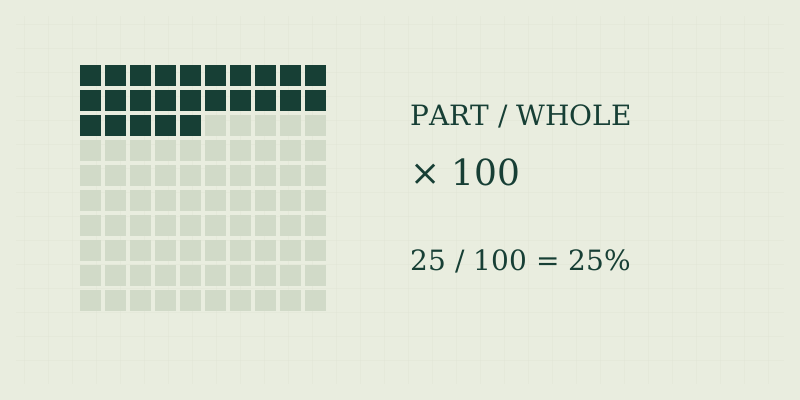
Start with the question, not the percent sign
These guides explain the small arithmetic choices that change a result: which amount represents the whole, whether a change is relative or measured in percentage points, and whether a discount applies to an original or already reduced price. Start with the percentage basics guide if the wording of the question is unclear. The change guide is for before-and-after amounts. The points guide is for rates. Discount and reverse-percentage guides help you move forward from a known price or work backward from a final amount. Weighted percentages explain why underlying group sizes matter, while the rounding guide helps you report a result without implying false precision. All prices and quantities in worked examples are illustrative. These guides do not supply current tax rates, quoted offers, investment returns, or statistical significance tests. Use the calculator to reproduce the arithmetic, then verify the underlying facts and any transaction-specific rules. For a real bill or consequential financial decision, keep the original document and obtain qualified help when the interpretation is uncertain.
Discount math: sale prices and stacked offers
Calculate the amount saved and final price, compare successive discounts, and keep tax, shipping, and eligibility separate from the arithmetic.
Percentage calculations: choose the right whole
Learn when to multiply, divide, or compare values, with worked percentage examples and a checklist for choosing the right denominator.
Percentage increase and decrease: use the original value
Calculate relative changes, understand asymmetric increases and decreases, and recognize when a zero or negative starting value needs another approach.
Percentage points versus percent change
Tell an absolute change in a rate from its relative percentage change, and write comparisons that keep the starting rate visible.
Reverse percentages: recover the original amount
Work backward from a discounted or increased amount using a multiplier, and see why adding the same percentage does not restore the original.
Rounding percentages without losing the meaning
Keep precision through calculations, understand why rounded shares may not total 100%, and choose a useful way to report small differences.
Combine percentages with the right weights
Use underlying counts to combine group rates, distinguish equal and unequal denominators, and avoid averaging percentages without context.